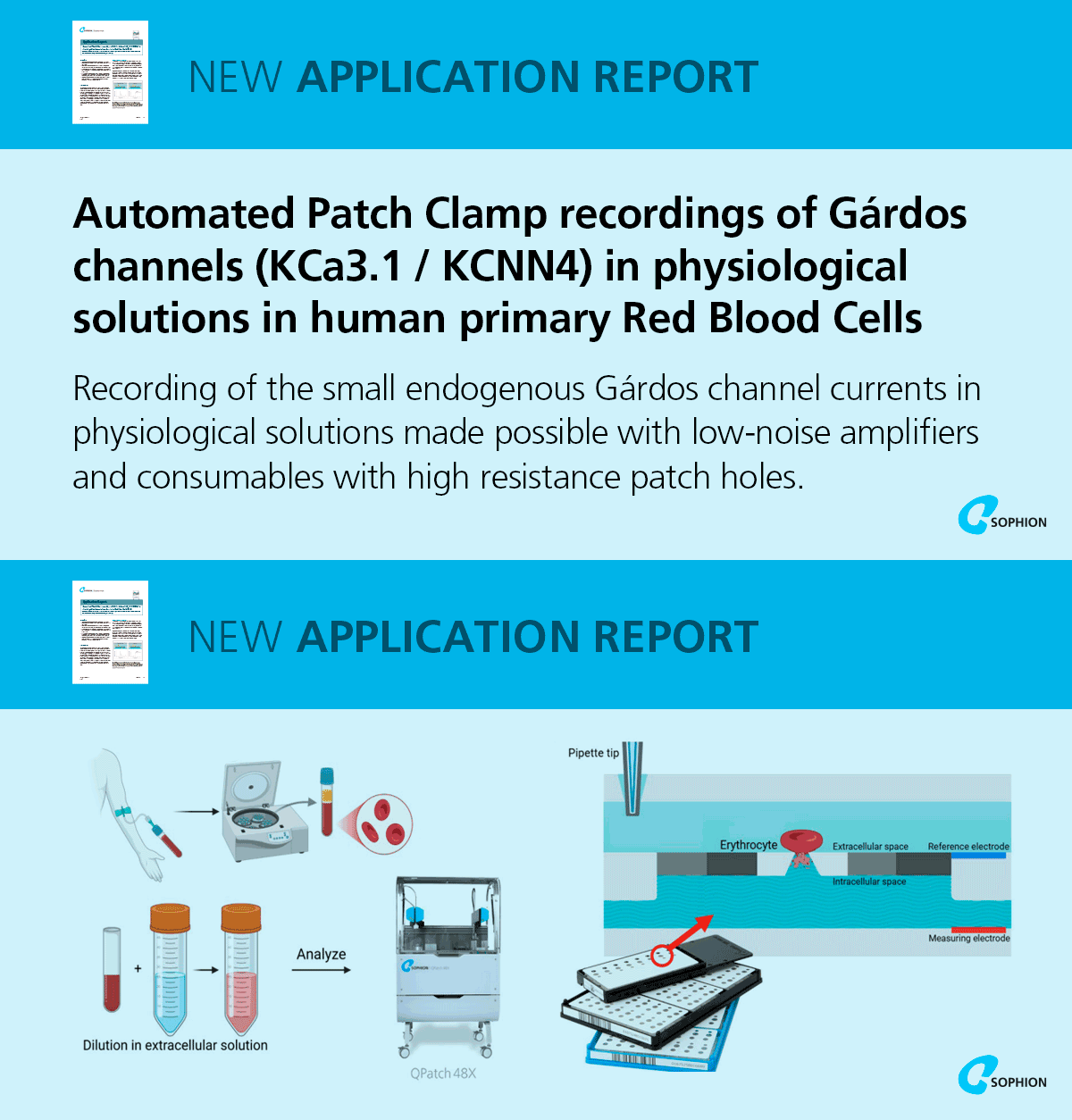
New Application Report on automated Gárdos channel recordings in human RBCs sets a new standard for low-noise ion channel measurements
Gárdos channels (KCa3.1/KCNN4) are key regulators of red blood cell volume and dehydration, but their small endogenous currents have been challenging to resolve. This application report presents an optimized automated patch clamp workflow combining HiR QPlates and low-noise amplifiers to enable reliable detection of native Gárdos currents in primary human RBCs under physiological conditions.
Gárdos channels: small currents, big consequences
Red blood cells (RBC) are often considered to be electrically ‘quiet’. Yet Gárdos channels (KCa3.1, KCNN4) quietly govern cell volume, flexibility, and survival in the microvasculature.
The challenge is scale. These are low-copy channels with currents close to the signal-noise floor. What has improved is how clearly we can now resolve them.
Native Gárdos channel recordings in human red blood cells
Our latest application report demonstrates direct recording of endogenous Gárdos channels in human primary red blood cells under physiological conditions.
It is a meaningful step forward. Measurements can now be made in intact, native cells with greater ease and confidence.
Two refinements underpin this:
- Q-amp – low-noise amplifiers that resolve picoamp-scale currents
- High-resistance (HiR), small-hole consumables that stabilize giga-ohm seals in fragile RBC membranes
Together, they improve signal clarity and reproducibility.
From calcium signal to cell shrinkage
Mechanical stress activates Piezo1, calcium enters, causing Gárdos channels to open. Potassium exits, water follows and the cell contracts. In healthy RBC, this pathway regulates volume. In disease, it drives dehydration and rigidity, contributing to diseases like hereditary xerocytosis and sickle cell anaemia.
NS309 enhances Gárdos channel currents, while TRAM34 reverses the effect, confirming specificity. Crucially, high-throughput APC captures variability across RBC populations, turning heterogeneity into measurable insight.
Improved high-throughput analysis of Gárdos channel function in human RBCs
This application report aims to highlight developments in Gárdos channel recordings in native, human RBC.
Click to explore the full application report showing how Gárdos channels can be measured with clarity in more physiological settings.