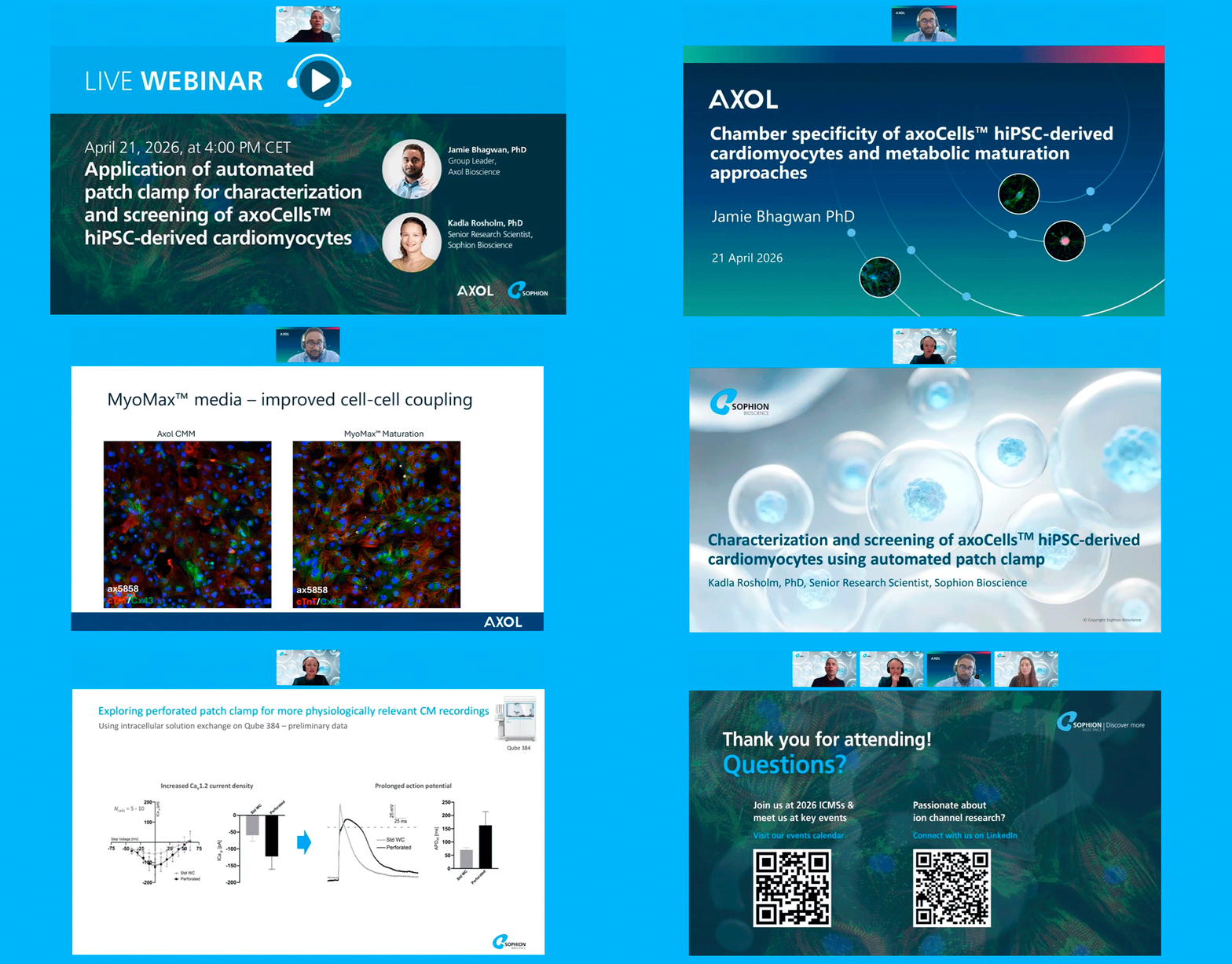
Sophion webinar recording: Application of automated patch clamp for characterization and screening of axoCellsTM hiPSC-derived cardiomyocytes
Last week, guest speaker Jamie Bhagwan from Axol Bioscience, together with Sophion’s Kadla Rosholm, and hosted by Sophion’s Damian Bell, led a webinar demonstrating how to advance hiPSC-cardiomyocyte models with improved maturation strategies and scalable electrophysiology workflows to accelerate cardiac drug discovery and safety testing.
Dr. Jamie Bhagwan opened the webinar by presenting Axol Bioscience’s latest advances in hiPSC-cardiomyocyte maturation. He highlighted how MyoMax™ maturation media drives metabolic and structural development in axoCells™ hiPSC-cardiomyocytes (CMs), promoting sarcomere alignment, faster conduction velocity, and a shift toward fatty acid metabolism. He also showcased a novel left ventricular differentiation protocol that generates highly enriched, chamber-specific populations, enabling more precise drug response and disease modeling.
Dr. Kadla Rosholm then demonstrated how Sophion Bioscience’s automated patch-clamp platforms can accelerate hiPSC-CM electrophysiology workflows. She shared practical strategies for preparing high-quality cell suspensions, achieving robust recordings of cardiac ion channels (Nav1.5, Cav1.2) and action potentials, and using perforated patch-clamp to enhance physiological relevance. Her examples highlighted how APC can increase throughput, reduce variability, and generate predictive, reproducible cardiac data.
Attendees left the webinar with actionable insights on combining advanced hiPSC-CM maturation with scalable automated patch-clamp workflows. The webinar showed how to improve assay reliability, accelerate screening, and obtain more physiologically relevant and reproducible data – empowering researchers to advance cardiac drug discovery, disease modeling, and safety testing with greater confidence.
Click below to watch the webinar and discover expert guidance on optimizing hiPSC-CM preparation, improving maturation, and leveraging automated patch-clamp for high-throughput, predictive cardiac research.