QPatch Compact driving new insights into bipolar disorder ion channel biology
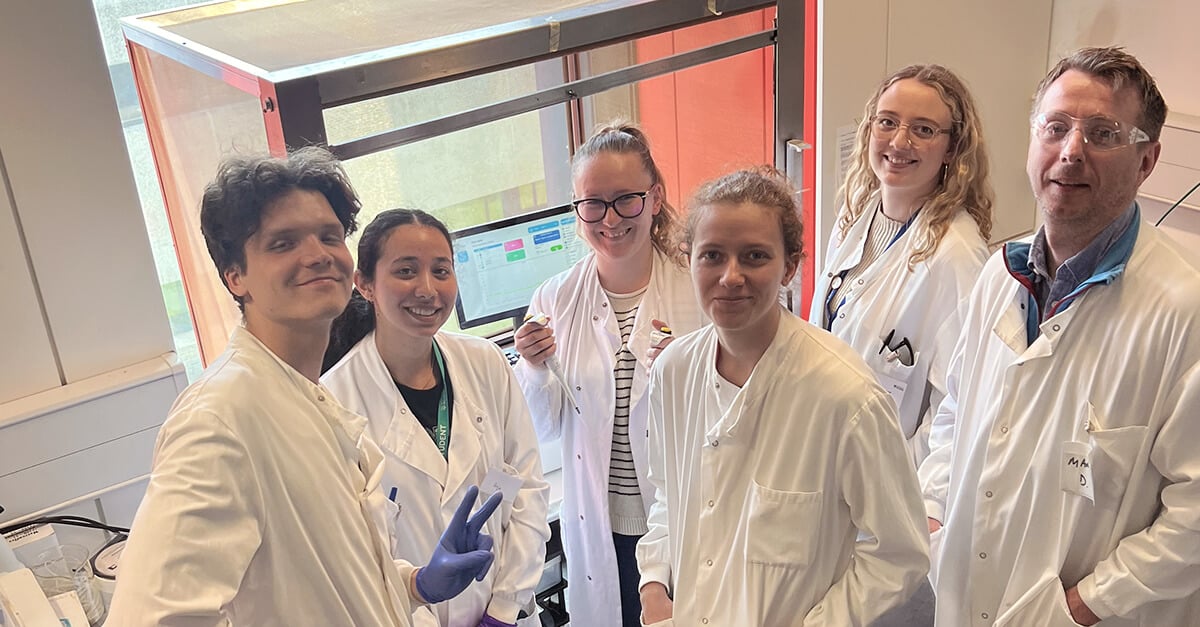
Associate Professor Mark Dallas and his team at the University of Reading, UK, have been awarded a QPatch Compact instrument grant. We spoke with Dr. Dallas about how Sophion’s automated patch clamp technology will accelerate research into bipolar disorder-associated ion channel variants and provide students with hands-on experience in advanced electrophysiology.
Q: It’s still early days, but how has the installation, training and working with Sophion gone so far?
We have an established relationship with Sophion through their contributions to our BSc Pharmacology programme and our success with the Sophion Research Grant scheme. It was therefore clear from the outset that Sophion shared our commitment to electrophysiology and to making these techniques accessible to a broader research community.
The delivery and training process have been straightforward and well supported. The ongoing technical support will be particularly important as we gain confidence with the platform and begin applying it across a range of cell types.
Q: Your application seeks to characterise voltage gated calcium channel variants implicated in bipolar disorder. Can you walk us through the first set of ion channel experiments you plan to run on the QPatch Compact, and what novel insights you hope to gain from automating these recordings?
For the first set of QPatch Compact experiments, we will start with protocol optimisation for our stable cell line expressing α2δ-1/β3/Cav1.2. We will then characterise the wild-type Cav1.2 channel using standard voltage-clamp protocols to measure activation, steady-state inactivation, peak current density, voltage dependence, and recovery from inactivation, before moving on to the bipolar disorder-associated variants. These experiments will give us an initial picture of whether the variants are shifting gating, reducing function, or changing how available the channel is during repeated depolarisation.
After that, we will add a simple pharmacology step using a known calcium channel blocker or modulator to see whether any of the variants alter drug sensitivity. That feels particularly relevant here, because the disease association is not just about whether the channel works, but whether the functional effect is consistent across variants or points to different mechanisms.
The main reason for using the QPatch Compact is efficiency and reproducibility. It should let us collect a decent amount of data with less day-to-day variability than manual patching, which matters a lot when the effects may be subtle. It also makes it easier to compare multiple variants under the same protocol without the experiment becoming prohibitively slow.
What we hope to gain is a functional map of the variants rather than a simple yes-or-no answer. Ideally, we would see whether certain variants cluster into shared phenotypes, such as altered voltage dependence or slower inactivation, which could provide a more mechanistic link between genotype and bipolar-risk biology.
Q: Bipolar disorder is a very complex neurological disease. Will you be interrogating aspects of the disorder using other techniques, perhaps collaborating with other labs to bring several complementary strands together?
Yes. The Reading group, led by Professor Stephens, is part of a larger international collaboration funded by the US charity BD2. This includes partners at the University of Oxford and the Lieber Institute for Brain Development in Baltimore, USA.
Together, we are investigating a genetic target identified in individuals living with bipolar disorder—the voltage-gated calcium channel CaV1.2. This collaborative effort spans clinical and fundamental biomedical research, enabling us to integrate genetic, physiological, and translational approaches. The ultimate aim is to open up new avenues for therapeutic intervention in what is a complex and multifactorial brain disorder.
Another element of your application that stood to out to reviewers was in using the QPatch Compact as educational or training tool for students.
Q: Can you elaborate on this educational aspect?
We are particularly excited about the opportunity to give students hands-on experience with an automated electrophysiology platform as part of their undergraduate training. Traditionally, electrophysiology teaching relies on manual approaches, where students often observe rather than actively participate. As a result, opportunities to develop practical skills in this area have been limited.
By incorporating the QPatch Compact into the curriculum, students will be able to engage directly with experiments, gaining practical experience in an important and rapidly evolving area of pharmacology.
Q: Do you have plans to expand this technology as an educational tool if this pilot-programme delivers on your ambitions?
Yes. If the pilot programme is successful, we would be keen to expand access to the platform and integrate it more fully into our teaching portfolio on a permanent basis.
Providing students with the opportunity to generate and analyse real-time ion channel data as part of their final-year research projects would be truly transformative. It would offer an unparalleled chance to work with state-of-the-art equipment, significantly enhancing their practical and analytical skills. In turn, this experience would help better prepare them for research careers in both academia and industry, and represents a clear asset for University of Reading undergraduates in an increasingly competitive employment market.
Would you like to take your lab’s research further with a Sophion Instrument Grant?