New Application Report on CiPA hERG is raising the bar for temperature on cardiac safety assays
hERG channels are central to cardiac repolarization and are a critical determinant of proarrhythmic risk in drug discovery. This application report presents an optimized automated patch clamp workflow for recording hERG currents from CHO cells under CiPA-compliant conditions, enabling stable measurements at physiological temperature (35–37°C) with a seal enhancer–free intracellular solution. The study validates hERG pharmacology using reference inhibitors and demonstrates high-quality, reproducible IC50 and Hill coefficient measurements on Sophion’s QPatch platform.
Improving cardiac safety screening with CiPA hERG assays at physiological temperature
Cardiac safety remains a major hurdle in drug discovery and development, and unintended inhibition of the human ether-à-go-go related gene (hERG, KV11.1) potassium channel is one of the most common reasons promising compounds fail. Because hERG channels drive the rapid delayed rectifier current (IKr) that governs cardiac repolarization, disruption of this current can prolong the QT interval and increase the risk of life-threatening arrhythmias such as torsades de pointes.
To address this risk more predictively, the Comprehensive in vitro Proarrhythmia Assay (CiPA) initiative introduced standardized experimental conditions for evaluating proarrhythmic liability. CiPA hERG assays are central to this framework, combining defined voltage protocols, concentration–response pharmacology, and experiments performed at physiologically relevant temperatures.
Building robust CiPA hERG assays on automated patch clamp (APC)
Recording hERG currents at physiological temperature (35–37°C) improves physiological relevance but can present practical challenges for electrophysiology experiments. Elevated temperatures often reduce seal stability and shorten recording duration, making long, data-rich pharmacological protocols more difficult to complete.
In this application report, our researchers demonstrate an optimized workflow for recording CHO cells expressing hERG channels on the QPatch automated patch clamp platform under CiPA hERG-compatible conditions. By refining key whole-cell protocol parameters, stable recordings were achieved using physiological intracellular solutions without the need for seal-enhancing additives.
The optimized protocol delivered:
- Gigaseal formation in >92% of recordings
- 77% of recordings passing electrophysiological quality filters
- Average experiment durations of >30 minutes at 35°C
- Reliable cumulative concentration–response experiments within single cells
These performance metrics provide a practical window for testing multiple compound concentrations while maintaining the physiological conditions required for CiPA assays.
Pharmacological validation of the CiPA hERG workflow
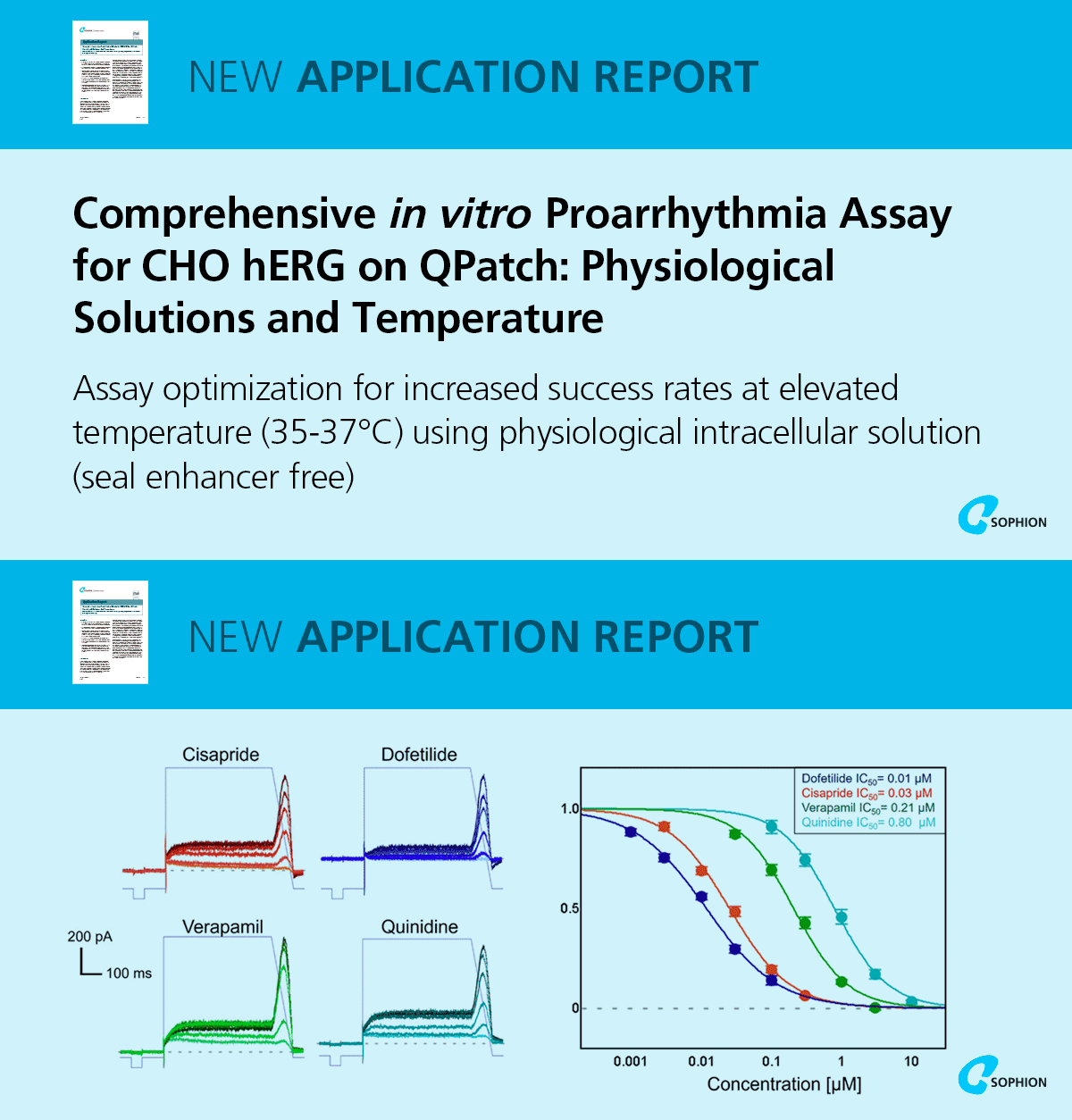
To validate the assay, four well-known hERG blockers were tested: cisapride, dofetilide, quinidine and verapamil. Each compound produced clear, concentration-dependent inhibition of hERG currents, enabling robust, consistent IC₅₀ determination, even using physiological temperatures and solutions.
Importantly, the potency values obtained from the automated CiPA hERG workflow closely matched published results from manual patch-clamp experiments. This confirms that automated patch clamp can deliver pharmacologically accurate measurements while operating under physiologically relevant CiPA conditions.
As cardiac safety screening continues to evolve, integrating reliable CiPA hERG assays into automated electrophysiology studies offers a powerful way to detect cardiac liabilities earlier in drug discovery and development.